 |
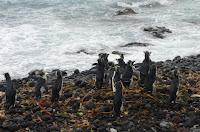
The first treated penguins are released
in April 2011. Photo by Katrine Herian/
The RSPB. |
TRISTAN DA CUNHA - Almost a year since thousands of endangered penguins'
lives were threatened by an oil spill on Nightingale Island (part of
Tristan da Cunha, a UK Overseas Territory in the South Atlantic) a
survey to assess the birds' population has taken place.
When the bulk carrier
MS Oliva
ran aground on 16 March last year, a huge effort to rescue the penguins
was launched. The ship was travelling from Brazil to Singapore with a
cargo of 65,000 tonnes of soya beans and 1,500 tonnes of bunker fuel
when it ran aground.
As the ship broke up in the rough seas, the
soya and oil were discharged into the waters around Nightingale. In the
days that followed, the oil reached Inaccessible Island, a World
Heritage Site, and Tristan more than 30 km away.
With the group of
islands being home to over 65 per cent of the global population of
endangered northern
rockhopper penguins, Tristanians (residents of Tristan da Cunha) and the Tristan Conservation Department, followed
by staff from the
RSPB and Southern African Foundation for the
Conservation of Coastal Birds (
SANCCOB), came together and moved quickly
to collect and clean up the oiled birds and prevent many more from
coming into contact with the oil.
Although efforts to rescue and
rehabilitate the penguins were huge, it has been unknown until now just
how much the rockhopper population has been affected by the spill. While
results from the latest counts suggest the breeding population hasn't
suffered as much as anticipated, scientists are warning that the news
should be met with caution.
Dr
Juliet Vickery, the RSPB's head of international research, said, "It's a
big relief that the initial results of the counts are better than we
had anticipated. We should not, however, relax our watch. There is much
we don't know about this species and the extent to which breeding colony
counts reveal the true picture of population trends is hard to
ascertain.
"Though immediate impact is not as bad as we feared,
there may be longer term sub-lethal effects reducing breeding success,
so it is vital that we continue to monitor the birds closely for several
more years to establish the true impact of the oil spill."
Estimations
show approximately 154,000 penguins bred on the island in 2011 but
estimates in the 1950s suggest there were "millions" of birds, with two
million pairs on Gough alone. The species remains globally threatened
and the causes of the historic decline remain unknown.
After the disaster, the RSPB launched an
emergency appeal to raise funds to help with the clean up. The appeal
has raised almost £70,000 and will be used to support penguin
monitoring, strengthen the island's biosecurity, and facilitate rodent
control on Tristan to reduce risk of rats being introduced to
Nightingale.
Katrine Herian works for the RSPB on the island, was
involved in the clean-up mission last year, and helped carry out the
counts. She said, "Something really needs to be said about the huge
Tristanian efforts in response to this disaster - without them, this
could have been a very different story.
"While the true impact of
the spill won't be known for some time yet, we can at least know that
everything that could be done was done."
Read related posts
Source
First assessment of endangered UK penguins since oil spill, 6 February 2012, RSPB press release


